Understanding Facial Aging: What Actually Changes Beneath the Skin
Aging is not something that happens to your face. It shows through your face from the bones beneath your skin to the surface you see in the mirror. Most patients can describe what they see—softer jawlines, deeper folds, hollowing under the eyes—but few have ever been shown what is actually happening underneath. At LexEnhance Aesthetics & Wellness in Lexington, KY, our physician-led team believes patients make better decisions about their care when they understand the architecture of their own face.
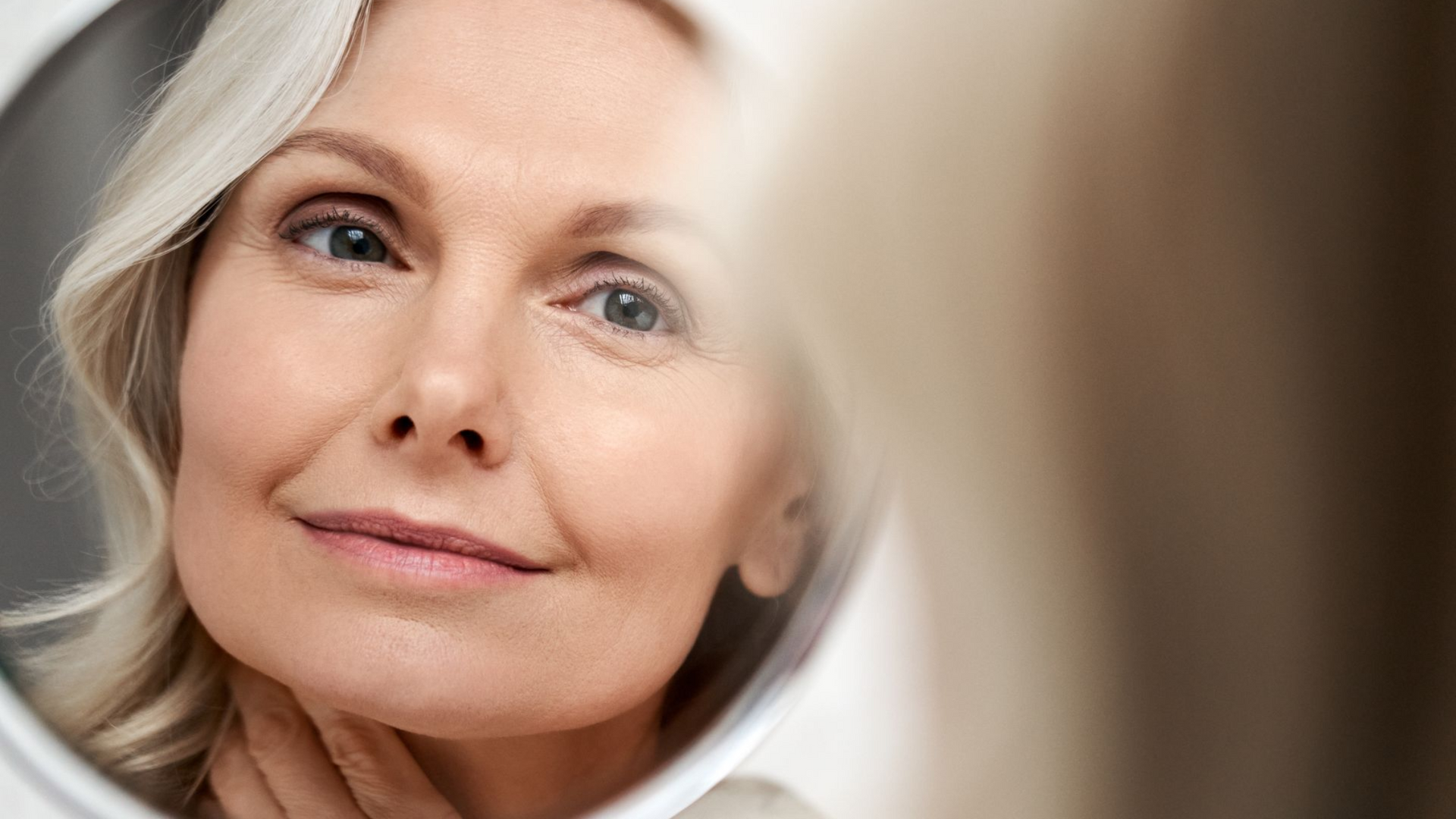
Below, we walk through the four layers of facial aging—bone, fat, muscle and ligament, and skin—and trace how those layers shift through your 20s, 30s, 40s, and beyond. We also cover newer concerns specific to weight loss medications, often referred to as "Ozempic face," and the lifestyle and clinical levers that meaningfully influence how the face ages.
The Four Layers of Facial Aging
The face is built like a layered structure, and each layer ages on its own timeline. When all four layers are considered together, the changes most people associate with "looking older" make far more sense.
1. Bone
The facial skeleton—particularly the orbital rim around the eyes, the cheekbones, and the jaw — gradually loses volume over time. The eye sockets widen. The midface recedes slightly. The jawline becomes less defined as the mandible loses height. This retreat is one of the most overlooked drivers of facial aging because it happens so slowly that the eye does not register it directly. Instead, we register the downstream effect: the soft tissue above no longer has the same scaffold to rest on.
2. Fat
The facial skeleton—particularly the orbital rim around the eyes, the cheekbones, and the jaw — gradually loses volume over time. The eye sockets widen. The midface recedes slightly. The jawline becomes less defined as the mandible loses height. This retreat is one of the most overlooked drivers of facial aging because it happens so slowly that the eye does not register it directly. Instead, we register the downstream effect: the soft tissue above no longer has the same scaffold to rest on.
3. Muscle and ligaments
The facial skeleton—particularly the orbital rim around the eyes, the cheekbones, and the jaw — gradually loses volume over time. The eye sockets widen. The midface recedes slightly. The jawline becomes less defined as the mandible loses height. This retreat is one of the most overlooked drivers of facial aging because it happens so slowly that the eye does not register it directly. Instead, we register the downstream effect: the soft tissue above no longer has the same scaffold to rest on.
4. Skin
The skin itself thins, loses elasticity, and produces less of the proteins and humectants that keep it firm and hydrated. This is the layer most people focus on because it is the most visible—but skin changes are often the result of what is happening deeper than the surface.
How Skin Itself Changes: Collagen, Elastin, and Hyaluronic Acid
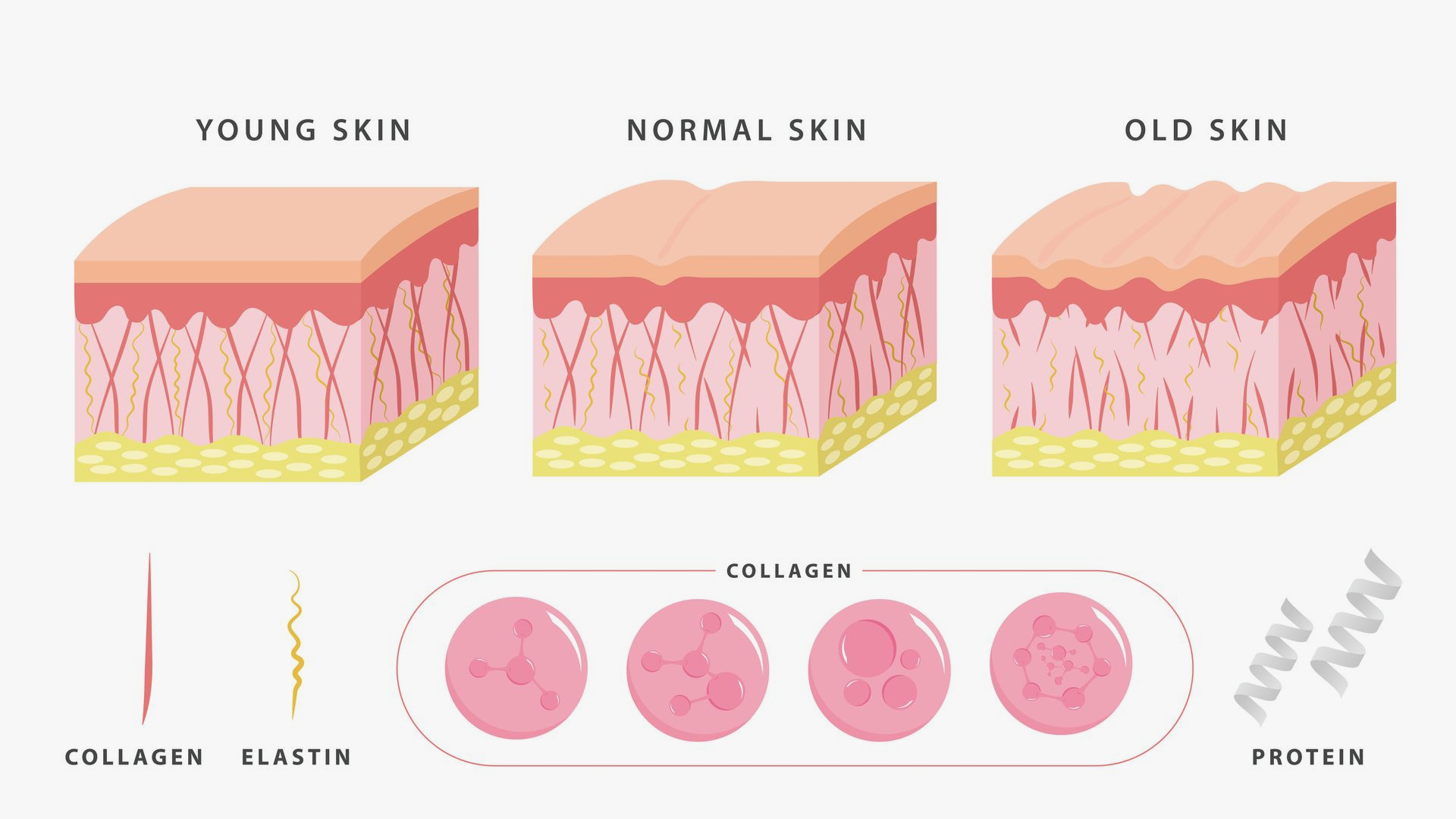
If you study cross-sections of young and aging skin side by side, three changes stand out — and these are the same three structural components our medical-grade skincare and clinical treatments at LexEnhance are designed to support.
Collagen
Collagen is the structural protein that gives skin its firmness and lift. It is densely packed and tightly cross-linked in young skin—visible in cross-section as a thick mesh of fibers. Beginning around the mid-20s, the body produces roughly 1% less collagen per year. After menopause, that loss accelerates significantly. As collagen thins, the skin loses its ability to bounce back and begins to settle into folds and creases.
Elastin
Elastin is the protein that allows skin to stretch and snap back. Unlike collagen, elastin is not readily replaced by the body once it is damaged. Sun exposure, smoking, and chronic inflammation all break elastin fibers—and once broken, they tend to stay broken. This is why skin laxity becomes increasingly difficult to address with topical care alone as the years accumulate.
Hyaluronic acid
Hyaluronic acid is the molecule responsible for the plumpness and hydration of healthy skin. It binds water within the dermis, supporting volume and a smooth surface. With age, the skin's natural reservoir of hyaluronic acid declines, contributing to the appearance of fine lines, dryness, and a flatter overall texture.
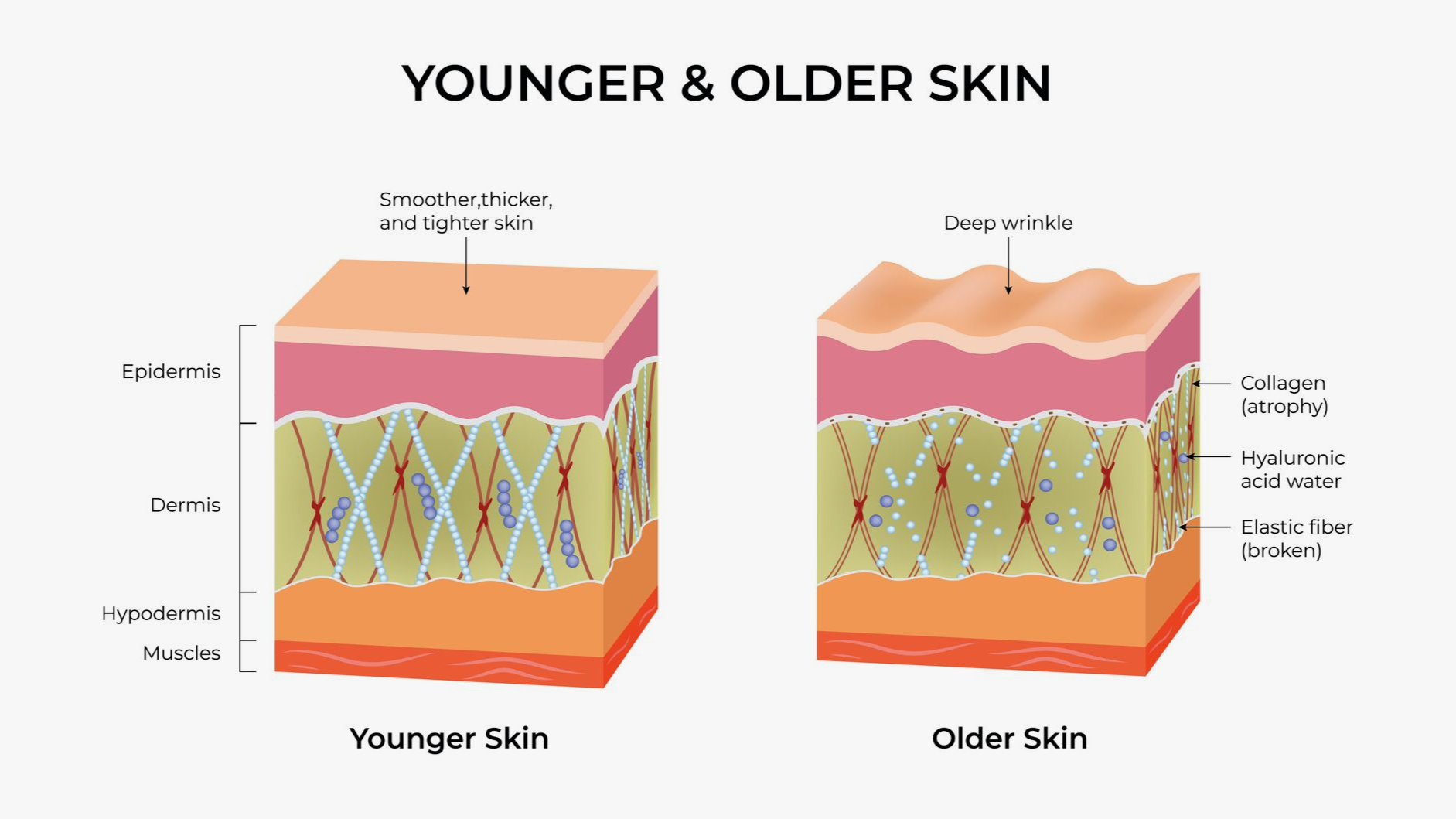
The image above shows the practical result: in younger skin, collagen and elastin form a tight, organized lattice with abundant hyaluronic acid between the fibers. In older skin, the lattice loosens, the elastin fibers fragment, and the hyaluronic acid that once filled the spaces between has largely dispersed. The surface above no longer has the same support, and a wrinkle forms.
Many of the ingredients in the skincare lines we carry are studied for their role in supporting these specific structures. For a plain-language reference to what each ingredient does, see our Skincare Ingredient Glossary.
Aging Decade by Decade
In your 20s
The face still has its full scaffold. Fat compartments are organized and well-positioned. Collagen production is at or near its peak. The aging that does occur in this decade is primarily driven by sun exposure, smoking, sleep, stress, and diet rather than by intrinsic biological change.
This is the decade in which prevention has the greatest leverage. Daily broad-spectrum sun protection, a basic medical-grade regimen with antioxidants, and lifestyle habits that reduce chronic inflammation establish the baseline that every subsequent decade builds on.
In your 30s
Collagen production begins its slow decline — roughly 1% per year. Cell turnover slows, so dullness and uneven tone become more noticeable. Fine lines begin to appear in areas of repeated expression: the outer corners of the eyes, the forehead, the area between the brows, and the perioral region around the mouth.
The first signs of fat compartment shifting often emerge late in this decade with a slight hollowing under the eyes, a beginning softening of the jawline. Many patients in their 30s notice that their skin no longer responds to over-the-counter products the way it once did. This is the decade when professional skincare becomes meaningfully different from drugstore skincare, and when treatments that stimulate the skin's own collagen response begin to show real value.
In your 40s and beyond
By the 40s, all four layers of the face are visibly changing at once. Bone resorption around the orbital rim and jaw becomes more pronounced. Fat compartments shift more noticeably. Ligaments loosen. Static lines deepen.
This is also the decade when the way the underlying structure of the face changes shape. The eyes can appear to sit closer together because the orbital aperture has widened and the surrounding soft tissue has descended.
Treatment is most effective when it addresses multiple layers in coordination. Skin-only approaches tend to underperform, while combined strategies produce more proportionate, natural-looking outcomes.
Weight Loss Medications and Facial Aging
The rapid expansion of GLP-1 medications like semaglutide, tirzepatide, and similar, has introduced a new pattern of facial change that did not previously exist at scale. When weight loss happens quickly, facial fat compartments are among the first to deplete. Because facial skin is uniquely thin and visible, the result can be a face that suddenly appears to have aged several years in a few months.
Patients describe it as looking gaunt, hollow, drawn, or simply older than they expect. The medical phenomenon underlying it is straightforward: the face has lost volume in the same compartments that already thin with age, but at a compressed timeline. The skin envelope has not had time to remodel around the new contours, and the ligaments that hold soft tissue in place have not adapted. The takeaway is that the face deserves to be part of the conversation, and there are concrete options for supporting it through the process.
What You Can Actually Do About It
There is no intervention that stops aging. There are many that meaningfully support how the face ages — and the most effective approach is almost always layered.
Lifestyle Foundations
Daily broad-spectrum sun protection remains the single most evidence-supported anti-aging intervention available. Sleep, nutrition, hydration, alcohol moderation, and stress management each contribute measurably to how the skin ages. None of these are glamorous, and all of them matter more than most clinical interventions.
Medical Grade Skincare
Topical products that contain meaningful concentrations of evidence-supported actives like the skincare lines we carry, are best when physician-selected for ingredient quality and clinical evidence. A consultation with our team can match a regimen to your skin and goals.
Clinical Treatments
For changes that have moved beyond what skincare alone can address, non-invasive aesthetic treatments and facial rejuvenation services offer options that work deeper in the tissue.
How LexEnhance Approaches Healthy Aging
Our practice was built around a simple idea: the body functions as an interconnected system, and patients who are seen and treated as whole people get better outcomes than patients who are seen as a collection of isolated concerns.
What happens inside the body shows up on the skin. Hormone replacement therapy, when appropriate, addresses one of the largest single drivers of post-menopausal aging. IV therapy and clinical supplementation support hydration and nutrient status. Mental health and sleep support address the systemic stress that accelerates skin aging in measurable ways.
In the context of aging, this means we do not treat the skin in isolation from hormones, weight, sleep, mental health, or the underlying architecture of the face. Our services are non-invasive by design, evidence-based by requirement, and physician-led by Drs. David Rodeberg and Jill Collins. We do believe patients deserve a clear picture of what is changing, why it is changing, and what they want to do about it.
Schedule a Consultation in Lexington, KY
If you would like a personalized assessment of your skin, your facial aging concerns, and the options that make sense for where you are, our clinical team is here to walk through what we are seeing and recommend an approach that fits your goals and your timeline. Call us at
(859) 346-8707 or
schedule your consultation online
to get started.